Sunday, 30 September 2018

What Tesla’s union-busting trial means for the rest of Silicon Valley

In some sense Tesla’s union question is an existential one: is Tesla a tech company or a car company? Car companies tend to have strong unions, while tech companies do not.
Musk runs Tesla like a tech company. Tesla’s done a top-to-bottom redesign of cars, and of the factory workflow. There are sudden pivots, and plenty of investment, despite a lack of profit — so far, so tech. Then you have the cars themselves: have to charge their batteries, the company can push over-the-air software updates to your car and totally change how it works, and uh they’re hackable. But they’re still cars: they go on roads, you drive them, and in most states you are legally compelled to buy car insurance for them.
Unions do exist in tech, though mostly among...
from The Verge - Tech Posts https://ift.tt/2xHlzNB
Panasonic’s Lumix S1R is an unapologetically blocky pro camera

Set for release in 2019, this new full-frame mirrorless contender isn’t shy about courting professionals
from The Verge - Tech Posts https://ift.tt/2OVSzrR
Saturday, 29 September 2018
Betterment keeps growing as fintech competitors rise
Betterment, which Barron’s recently declared the largest independent online financial adviser, is betting that the future of online investing includes a blend of robot and human advisers. And the plan is working, according to chief executive Jon Stein.
However, incumbents like Vanguard have leveraged existing strengths to move in to the market, and other startups like Robinhood have carved out swathes of the fast-growing market.
In response, Betterment has launched a series of new high-touch features on the platform, including “advice packages” that its users can buy to receive one-time advice from professional human experts.
In the interview below, Stein shares new details on the company’s growth, its plans to fend off the rise of commission-free trading, an eventual bear market and the many other challenges in the space, and eventually going public.
Gregg Schoenberg: Things have changed a lot for Betterment and the entire sector since we first sat down in early 2017. What are Betterment’s assets under management these days?
Jon Stein: We now have $15.5 billion under management and we’ve crossed 400,000 customers.
GS: Congratulations. Is each billion getting easier to accumulate or harder?
JS: We’ve seen acceleration every year we’ve been in the business. Back in the day, I like to say that it took us a year to get to our first $10 million under management. And then six months to get to $20 million, and three months to get to $30 million. Today, $10 million is a bad day. So the scale is far greater today because assets beget assets.
GS: That’s impressive, but when you look at the competitive environment, there are clearly some other online peers that have managed to build traction, and perhaps the incumbents watch you more closely now. What’s your core reason for optimism that when the dust settles, Betterment emerges better off?
JS: Part of it is our customer obsession and commitment to innovate around what the customer wants in financial services, and part of it is that it’s still very early in the journey for us. Just as Jeff Bezos always talks about his Day One, that’s how I feel about our space. We’ve got a long list of projects that we are working on and there’s so much more for us to do.
It’s about trust, and it’s about who you want to manage your money. Is it somebody whose sole focus is to help you make the most of it? Or somebody who is trying to gamify it or trying to make money off you in ways they’re not telling you about?
GS: But at the same time, you’re aware of Acorns and Robinhood and some others that are also building traction. Robinhood, for example, talks about becoming a full-service financial institution.
JS: I think some of these firms have different philosophies than what we do. I started this company because people were coming to ask me, “What should I do with my money?” It’s a really hard question, but we sought to excel on the three pillars that we think are most important in answering it: performance, convenience and peace of mind. I think that none of the companies you’ve mentioned do a better job than we do.
GS: Okay, but you have to acknowledge that dangling free commissions before a younger investor starting out is enticing, right? I mean, free works. Look at how Google and Facebook have trained a generation of people to expect free.
JS: Free isn’t new, right? There have been free offers for millions of years. I’ll agree with you that it’s powerful, but people are wise to the fact that companies are making money. And if the product that you’re being sold is free, well, you know, you’re the product.
GS: Right.
JS: And probably in ways that are less well aligned with your interests as a customer. We’ve always been transparent about our fee. It’s always been up front. That’s one of the ways we establish peace of mind. Because the only way we make money is that 25 basis point fee that we charge. That’s it. These other companies are selling you data, they’re trading against you—
GS: —You’re referring to selling the order flow?
JS: I’m saying order flow. I’m saying they’re actually selling trade data to other firms who can trade against you. They’re not there principally to make the most of your money. Betterment is. Betterment is a mission-driven company that’s going to make the most of our customer’s money, which is an increasingly unique position.
GS: So you’re really speaking to the issue of trust.
JS: It’s about trust, and it’s about who you want to manage your money. Is it somebody whose sole focus is to help you make the most of it? Or somebody who is trying to gamify it or trying to make money off you in ways they’re not telling you about?
GS: Let’s turn to the incumbents. Recently, your new board member, Donna Wells, said this: “Betterment is directly causing people to ask better informed and pretty uncomfortable questions of the incumbents.” Doesn’t that serve the ends of the Schwabs and Vanguards who have massive marketing and tech budgets? Haven’t you just motivated the behemoths?
JS: [Charles] Schwab is still trying to put everyone into cash and paying nothing on that cash. They’re trying to put all of their customers into their own funds and they make a lot of money off those funds — even though those funds probably aren’t what’s best for the customer. So they’re not acting in their customers’ best interests with the products they’re selling. Vanguard is a great company. We’ve learned a lot from them, but the only funds they’ll put you in on their platform are Vanguard funds. They refuse to look at other funds.
GS: But you use Vanguard funds.
JS: Yes, we use a lot of Vanguard funds, but they’re not right for everything. Vanguard is a mutual fund sales company. That’s all they’re doing … selling you mutual funds. So these companies are not thinking about the customer. And none of these incumbents can do that because they have so much to lose from the way that they are doing business today. Also, it’s a big market. There are lots of companies out there. You named a couple of big ones. But if we think more broadly about financial services competition, there are other big firms out there. There’s Raymond James and Edward Jones and there’s Financial Engines, J.P. Morgan Chase, Goldman Sachs, Bank of America, etc.
GS: Right, and we’ll get back to J.P. and Goldman in a moment, but the competition–
JS: –All of these firms see what we’re doing. And I think our vision probably isn’t as unique as it was eight years ago because we’ve moved the industry forward. We’ve set a standard of what customers should expect. And lots of people are trying to run at that now. But we keep moving the standard down the field. And I think it’s going to get harder and harder for these firms to catch up. Will one or two get there? I wouldn’t be surprised. There are a lot of smart people running these firms. Will all of them get there? No. But it doesn’t worry me that we’ll have competition. There’s always been competition in this space.
GS: Fair enough, but when you talk specifically about Vanguard, whose robo has crossed $100 billion in assets under management, and Schwab’s, which has over $30 billion, what you’re saying is that you’re not fazed because your near-$16 billion is unconflicted.
JS: That’s a big piece. I could also expand on why we’re better than them from a customer perspective. Our mobile and web apps are better than what they produce. We also have higher-performance services; the tax management that we do is better than what anybody else offers. The kinds of reporting and tools that you get are better than anybody else’s. The behavioral guard rails that we have are better, too. So we give you more performance, more convenience, and I believe better peace of mind.
GS: I think that JP and Goldman are especially interesting to touch on. JP’s You Invest, as you know, is dangling free trading out there and Goldman has embraced retail customers through Marcus, buying Clarity Money, etc.
JS: I think it’s great that more and more folks are going after the zero commission model. Because I’ve always thought that commissions should be zero. And that’s going to compete things away, to where there’s no longer a real competitive advantage in having zero commissions. Right? It should just be the way it is. But ultimately, trading stocks is not a productive activity for most Americans.
GS: Some people like to be self-directed.
JS: There’s a segment that wants to do that because it’s like a hobby. But it’s not actually the way to make the most of your money. I compare the financial system that we’ve built to the healthcare system. Imagine if you had all the drugs on the shelf, and anyone could take as much as they want of anything. It’s all cheap, but there are no doctors. You would never design a healthcare system that way because everyone would basically have to become an expert in managing their own situation. And that’s really expensive for people who are engaged in other careers and have busy lives.
Something like 40% of the 2,000 people that we surveyed thought that the market hadn’t gone up since 2008.
GS: Despite Betterment’s customer-centric attributes, it’s not immune to the competitive realities out there. In fact, Betterment, by virtue of the teaser rates that it offers, is playing the game, too.
JS: Yes, we do have a deal where people get three months free if you refer a customer. That’s always been the No. 1 way that we’ve attracted people. And that’s kept our cost of customer acquisition low, and kept us growing faster and faster, while spending less money each year. And so I think we’ve got a model that continues to generate return. By the way, with all the competition that you’re talking about, we’re still growing more customers at a lower cost than we have in any year ever.
GS: Is there any color you can give me on your customer acquisition costs?
JS: We don’t reveal our customer acquisition costs publicly, but they are a fraction of the numbers that I see quoted publicly. They’re also a fraction of what I see in the financials of the big competitors out there.
GS: If you put Betterment’s name on a stadium, I’m going to call you out on that, Jon. I want to turn to the topic of individual stock trading and specifically, to this recent commercial you’re airing featuring the actress, Maggie Siff.
JS: Yes, they’re filming “Billions” near me.
GS: The commercial, as you know, features your tagline, Outsmart Average.
JS: Yes.
GS: As you also know, her character on “Billions,” Wendy Rhoades, isn’t helping Bobby Axelrod pick a diversified portfolio of low-cost ETFs. So while I understand your view that most people shouldn’t be in individual stocks, aren’t you using the Wendy Rhoades character to send your target market another message?
JS: Well, Maggie is a strong spokesperson, because across a number of different characters, she’s played someone who’s wise, a coach and a leader. This campaign came out of a place of shifting the conversation away from Betterment versus the old way of investing, which conjures up images of boiler-room brokers and all those bad practices that traditional finance is peddling. But the problem with talking about all of the negative things in the industry is that people often don’t want to hear that.
GS: We’ve heard it ad nauseam.
JS: Yes, most people don’t want to hear that they’ve been doing the wrong thing with their money for a long time. But what we discovered is that we can shift away from talking about the industry, and shift the focus on our customers. There are people who are okay with the way things are, and there are people who are constantly striving for more. For example, I’ve got the right credit card for going to restaurants because it gives me 4 percent back. I’ve also got the right one for buying other stuff.
GS: You get 4 percent cash back at restaurants?
JS: Yes, the Uber card gives you 4 percent back on certain restaurants. So I’m an optimizer. When I go on a vacation, I’ll look at a number of sites and figure out exactly what’s the best place to go, and then I’ll book an Airbnb in the best neighborhood. It’s the same when it comes to my money. I want it managed really well and I demand more than whatever the status quo provides. That’s who we serve and that’s what we’re saying in the commercial. It’s about people who demand better than the status quo.
GS: But no individual stocks?
JS: Individual stocks are fine. There’s nothing wrong with managing your money that way. It’s just not the way most people want to manage their money.
GS: Let’s talk about the bear market, which I’m absolutely certain will happen in our lifetimes. As you know, many of Betterment’s customers have never lived through a bear market as an investor. The standard thing to say is that when it comes, the right thing to do is to stay the course, think long-term, etc.
JS: Yes.
I’ve always said, we’re building an institution and building to go public. It’s something that we want to ultimately do. My view is we’ll probably be at least twice as big as we are today before we go out.
GS: What happens when the market headlines get really ugly and people start seeing a sea of red in their Betterment account?
JS: A bear market is bad for everyone in this industry, not just Betterment. And we’ve been preparing for that in a number of ways. One, we have messaging that we’ve tested and have shown can help make those customers stay the course. We’ll also do things like suggest that instead of just pulling all your money out, maybe you want to think about changing your allocation. Take 2008, for example. Betterment wasn’t yet in business, but we saw a lot of people blow themselves up by getting out of the market.
GS: It was very tempting to run for cover.
JS: Actually, we ran a survey of customer attitudes since then and it was shocking to me that something like 40 percent of the 2,000 people that we surveyed thought that the market hadn’t gone up since 2008.
GS: Wow.
JS: Yes, it’s sad. And I think back to our mission, which is to help people make the most of their money and keep them invested. So it’s important to us that we do that throughout the cycle. We’re also preparing for it by thinking about our strategic options.
GS: Can you elaborate?
JS: Just this month, we launched a smart saver account, which gets you a higher yield on your cash. It’s currently paying 1.83 percent net of all of our fees, and it’s actually higher than that if you consider that it’s a tax advantaged account.
GS: So that’s not FDIC-insured then.
JS: It’s not FDIC-insured, but it’s SIPC-insured. Another area that we think is an interesting countercyclical play is our B2B business. Throughout the market cycle, people are contributing to their retirement, which makes our 401k business an attractive place for us to be. Similarly, our Betterment for Advisors business is a good place for us to be investing.
GS: How do you feel about adding life insurance and college savings products?
JS: Actually, many people already are saving for college with Betterment through things like IRAs, which can be used for college. As far as life insurance is concerned, we’re talking to a lot of financial partners about it because we think it’s interesting.
GS: I agree. So last topic: When does Betterment go public?
JS: I’ve always said, we’re building an institution and building to go public. It’s something that we want to ultimately do. My view is we’ll probably be at least twice as big as we are today before we go out. Is that going to take two years or five years? I can’t tell you exactly when it’s going to be because It will depend not just on our scale, but also on the capital markets, and a lot of other factors. But we continue to drive towards it, and I believe we’re in a great position. We’re audited, we have an amazing finance team, we’ve got great risk management, security processes … all of those things that companies that are preparing to IPO ought to be doing.
GS: Well, you appear to be big enough, and you have a great customer base and everybody knows who Betterment is. But as you said, timing matters.
JS: Yes, and they’re probably aren’t enough public companies out there today. But there’s innovation happening around how companies go public, which is needed. I’m also really encouraged by what some of our peers are doing out in the market, and I want us to continue to innovate in financial services, even around our IPO.
GS: On that note, Jon, I wish you and the team great luck.
JS: Thanks very much, Gregg.
This interview has been edited for content, length and clarity.


from TechCrunch https://ift.tt/2xIpERC
5 takeaways on the state of AI from Disrupt SF
The promise of artificial intelligence is immense, but the roadmap to achieving those goals still remains unclear. Onstage at TechCrunch Disrupt SF, some of AI’s leading minds shared their thoughts on current competition in the market, how to ensure algorithms don’t perpetuate racism and the future of human-machine interaction.
Here are five takeaways on the state of AI from Disrupt SF 2018:
1. U.S. companies will face many obstacles if they look to China for AI expansion
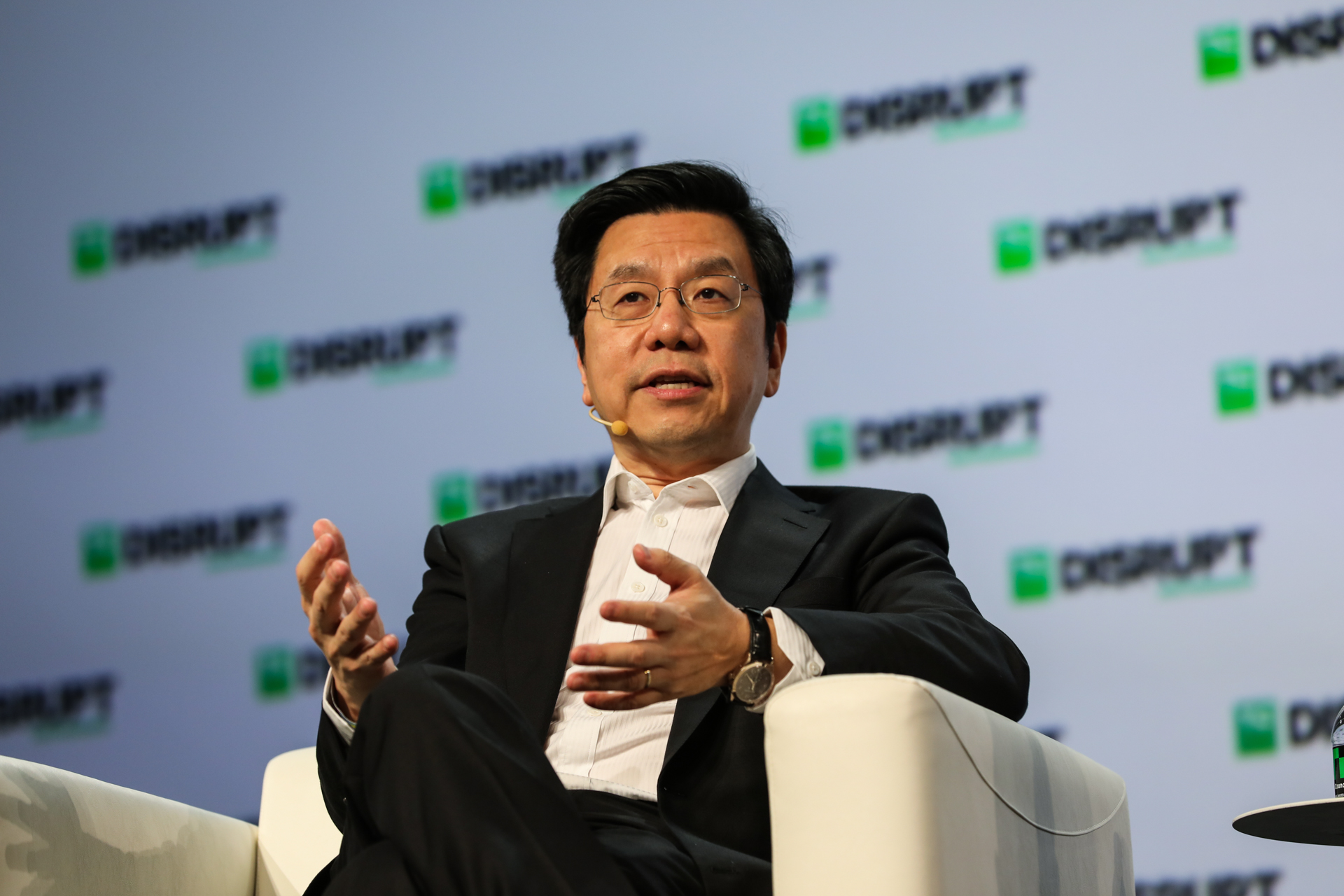
Sinnovation CEO Kai-Fu Lee (Photo: TechCrunch/Devin Coldewey)
The meteoric rise in China’s focus on AI has been well-documented and has become impossible to ignore these days. With mega companies like Alibaba and Tencent pouring hundreds of millions of dollars into home-grown businesses, American companies are finding less and less room to navigate and expand in China. AI investor and Sinnovation CEO Kai-Fu Lee described China as living in a “parallel universe” to the U.S. when it comes to AI development.
“We should think of it as electricity,” explained Lee, who led Google’s entrance into China. “Thomas Edison and the AI deep learning inventors — who were American — they invented this stuff and then they generously shared it. Now, China, as the largest marketplace with the largest amount of data, is really using AI to find every way to add value to traditional businesses, to internet, to all kinds of spaces.”
“The Chinese entrepreneurial ecosystem is huge, so today the most valuable AI companies in computer vision, speech recognition, drones are all Chinese companies.”
2. Bias in AI is a new face on an old problem
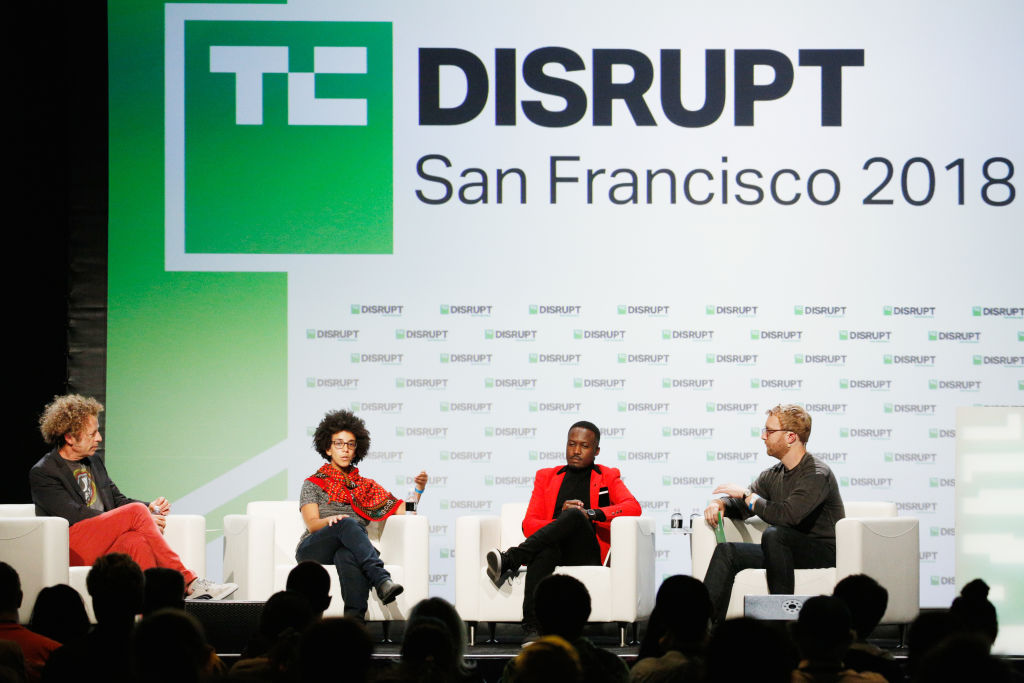
SAN FRANCISCO, CA – SEPTEMBER 07: (L-R) UC Berkeley professor Ken Goldberg, Google AI research scientist Timnit Gebru, UCOT founder and CEO Chris Ategeka and moderator Devin Coldewey speak onstage during Day 3 of TechCrunch Disrupt SF 2018 at Moscone Center on September 7, 2018 in San Francisco, California. (Photo by Kimberly White/Getty Images for TechCrunch)
AI promises to increase human productivity and efficiency by taking the grunt work out of many processes. But the data used to train many AI systems often falls victim to the same biases of humans and, if unchecked, can further marginalize communities caught up in systemic issues like income disparity and racism.
“People in lower socio-economic statuses are under more surveillance and go through algorithms more,” said Google AI’s Timnit Gebru. “So if they apply for a job that’s lower status they are likely to go through automated tools. We’re right now in a stage where these algorithms are being used in different places and we’re not event checking if they’re breaking existing laws like the Equal Opportunity Act.”
A potential solution to prevent the spread of toxic algorithms was outlined by UC Berkeley’s Ken Goldberg who cited the concept of ensemble theory, which involves multiple algorithms with various classifiers working together to produce a single result.
We’re right now in a stage where these algorithms are being used in different places and we’re not even checking if they’re breaking existing laws.
But how do we know if the solution to inadequate tech is more tech? Goldberg says this is where having individuals from multiple backgrounds, both in and outside the world of AI, is vital to developing just algorithms. “It’s very relevant to think about both machine intelligence and human intelligence,” explained Goldberg. “Having people with different viewpoints is extremely valuable and I think that’s starting to be recognized by people in business… it’s not because of PR, it’s actually because it will give you better decisions if you get people with different cognitive, diverse viewpoints.”
3. The future of autonomous travel will rely on humans and machines working together
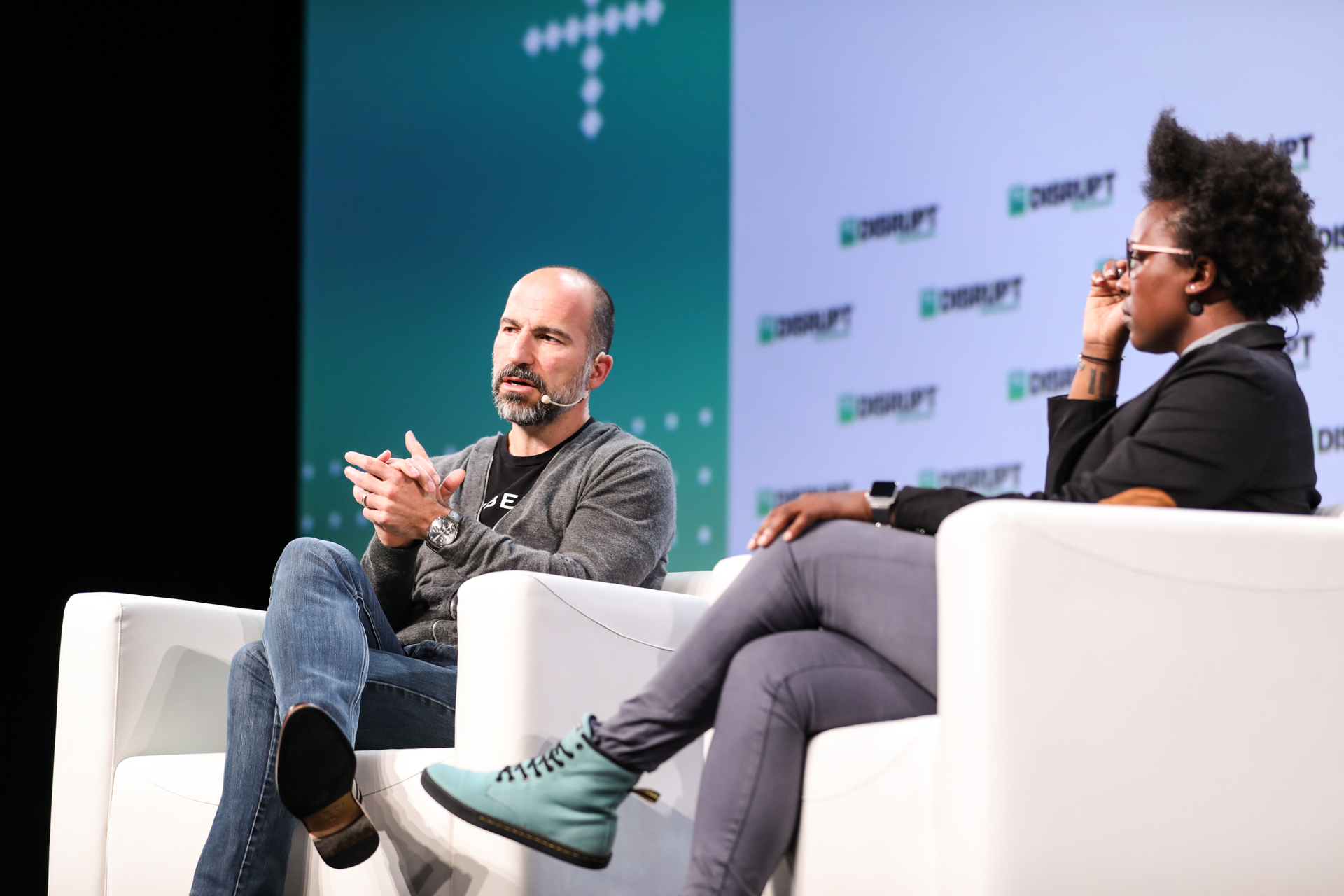
Uber CEO Dara Khosrowshahi (Photo: TechCrunch/Devin Coldewey)
Transportation companies often paint a flowery picture of the near future where mobility will become so automated that human intervention will be detrimental to the process.
That’s not the case, according to Uber CEO Dara Khosrowshahi. In an era that’s racing to put humans on the sidelines, Khosrowshahi says humans and machines working hand-in-hand is the real thing.
“People and computers actually work better than each of them work on a standalone basis and we are having the capability of bringing in autonomous technology, third-party technology, Lime, our own product all together to create a hybrid,” said Khosrowshahi.
Khosrowshahi ultimately envisions the future of Uber being made up of engineers monitoring routes that present the least amount of danger for riders and selecting optimal autonomous routes for passengers. The combination of these two systems will be vital in the maturation of autonomous travel, while also keeping passengers safe in the process.
4. There’s no agreed definition of what makes an algorithm “fair”
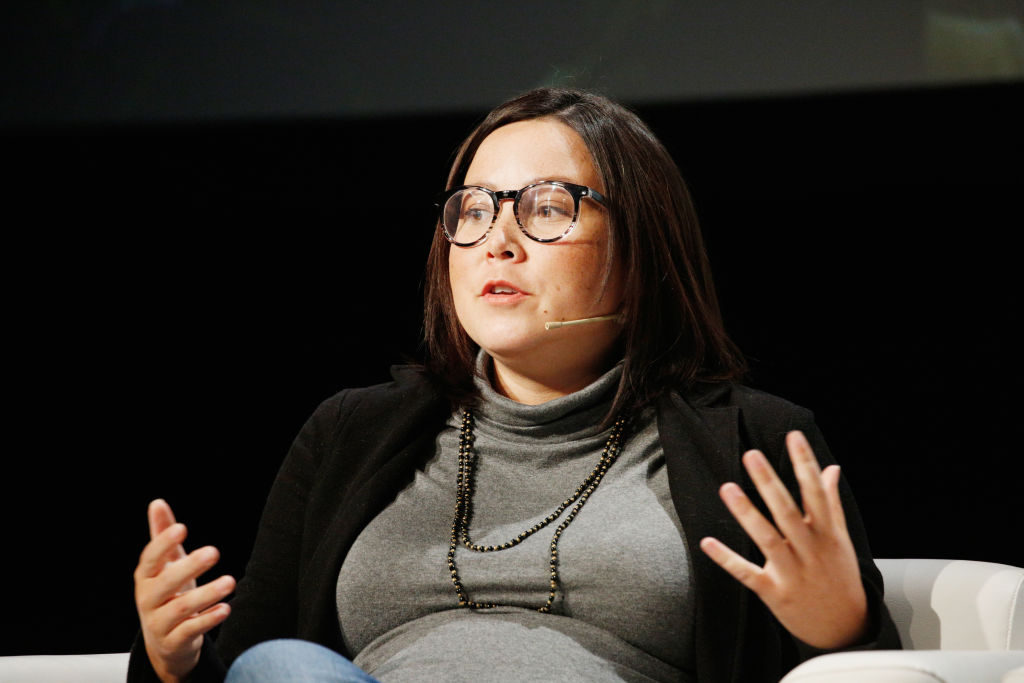
SAN FRANCISCO, CA – SEPTEMBER 07: Human Rights Data Analysis Group lead statistician Kristian Lum speaks onstage during Day 3 of TechCrunch Disrupt SF 2018 at Moscone Center on September 7, 2018 in San Francisco, California. (Photo by Kimberly White/Getty Images for TechCrunch)
Last July, ProPublica released a report highlighting how machine learning can falsely develop its own biases. The investigation examined an AI system used in Fort Lauderdale, Fla., that falsely flagged black defendants as future criminals at a rate twice that of white defendants. These landmark findings set off a wave of conversation on the ingredients needed to build fair algorithms.
One year later AI experts still don’t have the recipe fully developed, but many agree a contextual approach that combines mathematics and an understanding of human subjects in an algorithm is the best path forward.
“Unfortunately there is not a universally agreed upon definition of what fairness looks like,” said Kristian Lum, lead statistician at the Human Rights Data Analysis Group. “How you slice and dice the data can determine whether you ultimately decide the algorithm is unfair.”
Lum goes on to explain that research in the past few years has revolved around exploring the mathematical definition of fairness, but this approach is often incompatible to the moral outlook on AI.
“What makes an algorithm fair is highly contextually dependent, and it’s going to depend so much on the training data that’s going into it,” said Lum. “You’re going to have to understand a lot about the problem, you’re going to have to understand a lot about the data, and even when that happens there will still be disagreements on the mathematical definitions of fairness.”
5. AI and Zero Trust are a “marriage made in heaven” and will be key in the evolution of cybersecurity
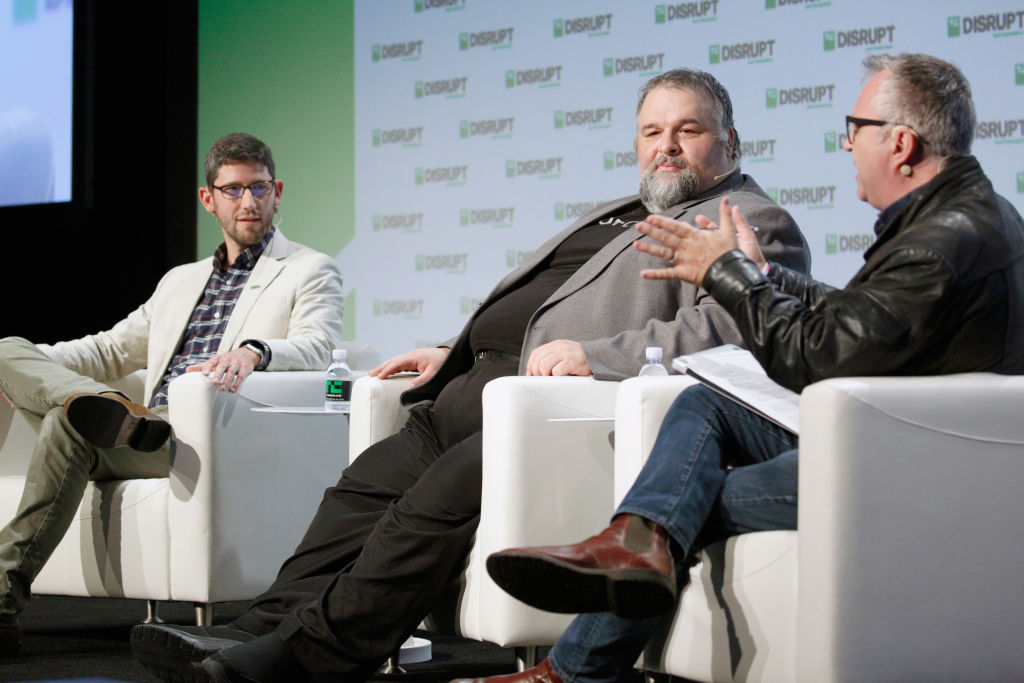
SAN FRANCISCO, CA – SEPTEMBER 06: (l-R) Duo VP of Security Mike Hanley, Okta executive director of Cybersecurity Marc Rogers and moderator Mike Butcher speak onstage during Day 2 of TechCrunch Disrupt SF 2018 at Moscone Center on September 6, 2018 in San Francisco, California. (Photo by Kimberly White/Getty Images for TechCrunch)
If previous elections have taught us anything it’s that security systems are in dire need of improvement to protect personal data, financial assets and the foundation of democracy itself. Facebook’s ex-chief security officer Alex Stamos shared a grim outlook on the current state of politics and cybersecurity at Disrupt SF, stating the security infrastructure for the upcoming Midterm elections isn’t much better than it was in 2016.
So how effective will AI be in improving these systems? Marc Rodgers of Okta and Mike Hanley of Duo Security believe the combination of AI and a security model called Zero Trust, which cuts off all users from accessing a system until they can prove themselves, are the key to developing security systems that actively fight off breaches without the assistance of humans.
“AI and Zero Trust are a marriage made in heaven because the whole idea behind Zero Trust is you design policies that sit inside your network,” said Rodgers. “AI is great at doing human decisions much faster than a human ever can and I have great hope that as Zero Trust evolves, we’re going to see AI baked into the new Zero Trust platforms.”
By handing much of the heavy lifting to machines, cybersecurity professionals will also have the opportunity to solve another pressing issue: being able to staff qualified security experts to manage these systems.
“There’s also a substantial labor shortage of qualified security professionals that can actually do the work needed to be done,” said Hanley. “That creates a tremendous opportunity for security vendors to figure out what are those jobs that need to be done, and there are many unsolved challenges in that space. Policy engines are one of the more interesting ones.”


from TechCrunch https://ift.tt/2xYcJKD
Everything you need to know about Facebook’s data breach affecting 50M users
Facebook is cleaning up after a major security incident exposed the account data of millions of users. What’s already been a rocky year after the Cambridge Analytica scandal, the company is scrambling to regain its users trust after another security incident exposed user data.
Here’s everything you need to know so far.
What happened?
Facebook says at least 50 million users’ data were confirmed at risk after attackers exploited a vulnerability that allowed them access to personal data. The company also preventively secure 40 million additional accounts out of an abundance of caution.
What data were the hackers after?
Facebook CEO Mark Zuckerberg said that the company has not seen any accounts compromised and improperly accessed — although it’s early days and that may change. But Zuckerberg said that the attackers were using Facebook developer APIs to obtain some information, like “name, gender, and hometowns” that’s linked to a user’s profile page.
What data wasn’t taken?
Facebook said that it looks unlikely that private messages were accessed. No credit card information was taken in the breach, Facebook said. Again, that may change as the company’s investigation continues.
What’s an access token? Do I need to change my password?
When you enter your username and password on most sites and apps, including Facebook, your browser or device is set an access tokens. This keeps you logged in, without you having to enter your credentials every time you log in. But the token doesn’t store your password — so there’s no need to change your password.
Is this why Facebook logged me out of my account?
Yes, Facebook says it reset the access tokens of all users affected. That means some 90 million users will have been logged out of their account — either on their phone or computer — in the past day. This also includes users on Facebook Messenger.
When did this attack happen?
The vulnerability was introduced on the site in July 2017, but Facebook didn’t know about it until this month, on September 16, 2018, when it spotted a spike in unusual activity. That means the hackers could have had access to user data for a long time, as Facebook is not sure right now when the attack began.
Who would do this?
Facebook doesn’t know who attacked the site, but the FBI is investigating, it says.
However, Facebook has in the past found evidence of Russia’s attempts to meddle in American democracy and influence our elections — but it’s not to say that Russia is behind this new attack. Attribution is incredibly difficult and takes a lot of time and effort. It recently took the FBI more than two years to confirm that North Korea was behind the Sony hack in 2016 — so we might be in for a long wait.
How did the attackers get in?
Not one, but three bugs led to the data exposure.
In July 2017, Facebook inadvertently introduced three vulnerabilities in its video uploader, said Guy Rosen, Facebook’s vice president of product management, in a call with reporters. When using the “View As” feature to view your profile as someone else, the video uploader would occasionally appear when it shouldn’t display at all. When it appeared, it generated an access token using the person who the profile page was being viewed as. If that token was obtained, an attacker could log into the account of the other person.
Is the problem fixed?
Facebook says it fixed the vulnerability on September 27, and then began resetting the access tokens of people to protect the security of their accounts.
Did this affect WhatsApp and Instagram accounts?
Facebook said that it’s not yet sure if Instagram accounts are affected, but were automatically secured once Facebook access tokens were revoked. Affected Instagram users will have to unlink and relink their Facebook accounts in Instagram in order to cross post to Facebook.
On a call with reporters, Facebook said there is no impact on WhatsApp users at all.
Are sites that use Facebook Login also affected?
If an attacker obtained your Facebook access token, it not only gives them access to your Facebook account as if they were you, but any other site that you’ve used Facebook to login with, like dating apps, games, or streaming services.
Will Facebook be fined or punished?
If Facebook is found to have breached European data protection rules — the newly implemented General Data Protection Regulation (GDPR) — the company can face fines of up to four percent of its global revenue.
However, that fine can’t be levied until Facebook knows more about the nature of the breach and the risk to users.
Another data breach of this scale – especially coming in the wake of the Cambridge Analytica scandal and other data leaks – has some in Congress calling for the social network to be regulated. Sen. Mark Warner (D-VA) issued a stern reprimand to Facebook over today’s news, and again pushed his proposal for regulating companies holding large data sets as ““information fiduciaries” with additional consequences for improper security.
FTC Commissioner Rohit Chopra also tweeted that “I want answers” regarding the Facebook hack. It’s reasonable to assume that there could be investigators in both the U.S. and Europe to figure out what happened.
Can I check to see if my account was improperly accessed?
You can. Once you log back into your Facebook account, you can go to your account’s security and login page, which lets you see where you’ve logged in. If you had your access tokens revoked and had to log in again, you should see only the devices that you logged back in with.
Should I delete my Facebook account?
That’s up to you! But you may want to take some precautions like changing your password and turning on two-factor authentication, if you haven’t done so already. If you’re weren’t impacted by this, you may want to take the time to delete some of the personal information you’ve shared to Facebook to reduce your risk of exposure in future attacks, if they were to occur.


from TechCrunch https://ift.tt/2xYL508
Pulling back the curtain on how SoftBank’s massive Vision Fund works — including just how big a check it can write
Picture it. The scene is Silicon Valley. Suddenly an investment firm materializes on the scene and starts writing checks bigger than anyone is accustomed to seeing. Fellow investors start to privately complain. Its partners are poseurs, they say. The firm is driving up valuations, they continue. It’s going to ruin venture capital, they conclude.
It was said of Andreessen Horowitz when it burst onto the scene in 2009. (Remember its then jaw-dropping decision to hand GitHub a $100 million check in 2012?) Today, it’s being said even more widely about the SoftBank Vision Fund, and little wonder, given that SoftBank is fast plowing $100 billion into mostly venture-backed companies and that, according to its CEO, Masayoshi Son, more $100 billion funds are coming soon.
Just this week, the firm led a $1 billion round in the India-based hotel chain and room aggregator Oyo. It also participated in two other enormous deals, leading a $450 million round for the real estate tech platform Compass, which creates tools for residential real estate agents and more recently launched a commercial brokerage division. Separately, it led a $400 million round in the home-buying startup Opendoor.
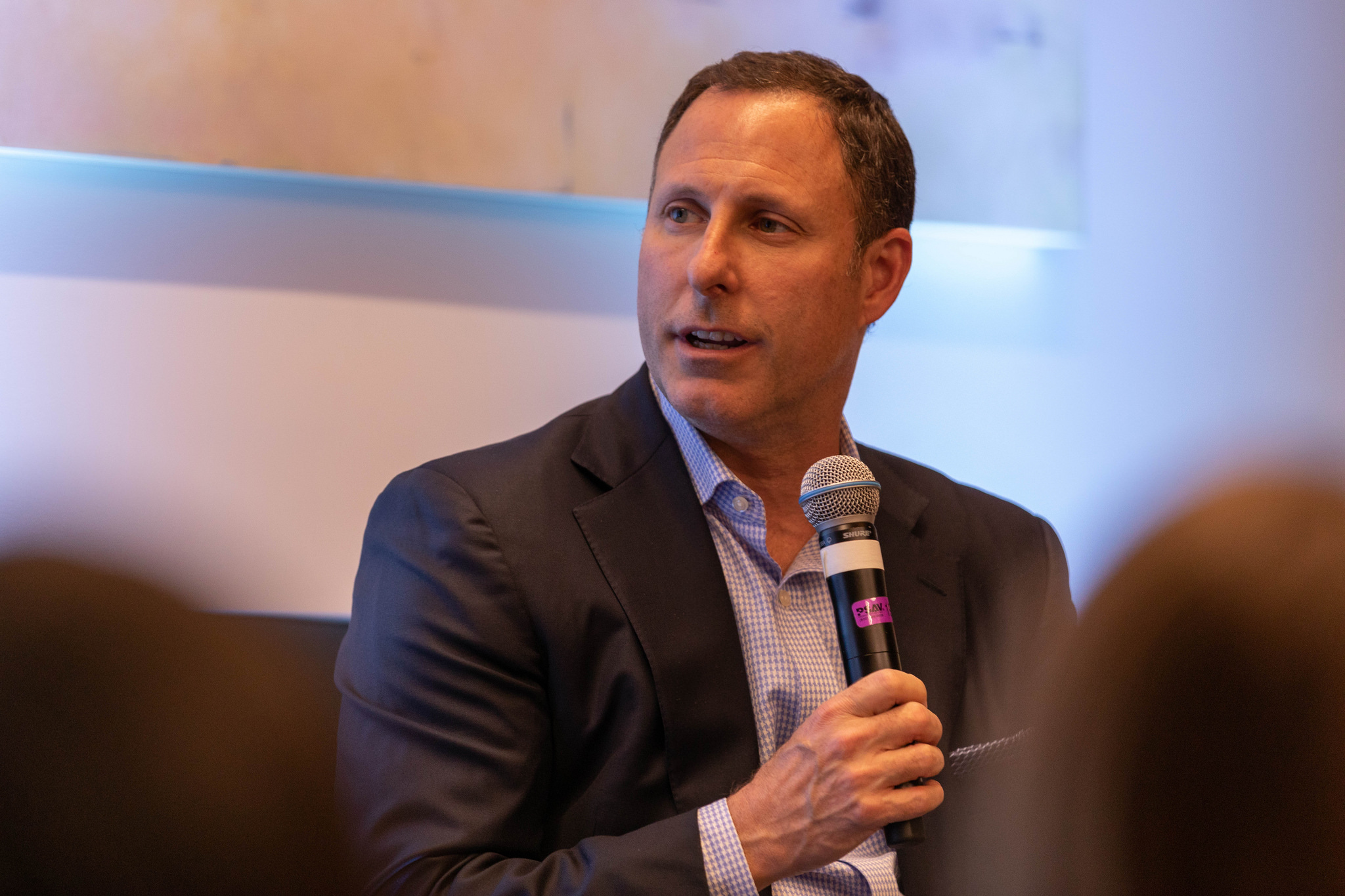
What might be the longer-term impact of so much capital getting jammed into still private companies? How does SoftBank decide who to fund, and who to steer around? On Tuesday night, at a StrictlyVC event in San Francisco, we had the chance to talk with two of its investors, Vision Fund Managing Director Jeff Housenbold and Anna Lo, a director with SoftBank Investment Advisors, to learn more about how the whole thing works — and to run past them some of the criticisms that their fellow investors have been whispering to us.
In addition to some basic stats (SoftBank’s Vision Fund is run by 86 people, including nine managing directors, across offices in Tokyo, London, and San Carlos, Ca.; it has a 14-year investing period), you’ll learn what SoftBank won’t touch, how big a check it can write before asking for permission from its own investors, and what happens to companies that say they are in talks with the Vision Fund when they are not.
Also, spoiler alert: the Vision Fund has vice clauses that prevent it from funding tobacco, firearms and certain other companies, as do most venture firms. (We’d asked in the context of discussing whether SoftBank might ever fund the e-cig company Juul, which also appeared at the event.)

You can watch the chat for yourself below. In the meantime, some outtakes from that conversation follow, edited lightly for length:
TC: Walk us through how you decide on which companies to approach.
AL: Definitely leaders in their respective markets and geographies. Excellent, rock star teams. We are very friendly and collaborative with our founders, so we need to see eye to eye on their vision. The criteria isn’t so different from a lot of VCs here in the audience.
TC: More specifically, what do you want to see?
JH: In the continuum of venture capital, we’re late-stage growth. Our minimum check size is $100 million. We’re looking for product-market fit [meaning] some revenue and some traction before we typically come into a deal. It depends on which industry and which company. It could be GMV. It could be revenue. If it’s in enterprise software, it could be how many clients do they have and the diversification of the revenue and what the repeats and retention rates [are].
But we’re looking for companies that are growing very quickly and could deploy a lot of capital in a differentiated way to either capture new customers, market share, enter into new geographies, expand their product portfolio, or move into adjacent markets.
TC: How do you think about making that first call? I would imagine when companies get a call from you, it’s both exciting and nerve wracking, because you’re clearly looking at a certain sector and probably not just talking to that one company.
JH: First, we’ll do landscape studies, and have strategic hypotheses around certain sectors and how technology is impacting that sector and driving innovation. So, let’s say, in the real estate sector: we took a scan and looked at over 80 different companies across different aspects of the value chain. So we’ve already mapped out which are the incumbents, who are the up-and-coming startups, who is differentiating themselves, who’s getting traction. And then we have a thesis [about] where can money be made in those value chains. And then we go and approach those companies.
The other thing, often the phone rings when you have a large fund. People call us opportunistically. So sometimes it’s like, ‘Oh, you know, we looked at that eight months ago; maybe we should take another look.’ Because now a new player entered, or this company has gotten more traction, or they completed that merger they told us about, where they move from $20 million in [annual recurring revenue] to now $100 million. And we’ll come back to that because they called us. So it’s a combination.
AL: We’re also looking for successful e-commerce models in emerging markets that are beginning to display characteristics such as in China in terms of rising income and the adoption of mobile internet.
JH: Also, half of what you read in the press, as you can imagine, is fake news. So companies are now using our name to create competitive tension in a term sheet, where we’ve never even met with the company. So I’ll read in the press, ‘Oh, we’re investing a billion in so and so company,’ and I log in and no one has ever met the company.
TC: Is that company then permanently off your screen?
JH: It doesn’t go [over] well internally.
TC: What does the decision-making process look like inside the Vision Fund? There are five managing directors in the Bay Area. You’re one of them. Is it a majority-rules situation?
JH: So, for example, my team looks after consumer and real estate [opportunities], so if it’s a deal in consumer and we’re intrigued by it, we’ll do a bunch of work. We’ll meet with the management team. We’ll do some outside-in and inside-out research, and we’ll come up with an investment thesis.
If we have conviction internally, we then take it to managing partners and we ask the management team to come back and meet all of us. If there are no major objections, then we bring [the deal] to a global deal call, where partners around the world come together once a week, and we walk through our investment case. And Masa is on that call often, and he’ll say, ‘I’m intrigued. Bring the entrepreneur to Japan.’ So Masa meets every single entrepreneur who we invest in, which is phenomenal because he’s brilliant . . . he has amazing pattern recognition. But what’s really amazing is, he’s fearless. He’ll sit with an entrepreneur and go, ‘I really love that concept. Have you thought about what if we remove barriers?’ Or, ‘What if capital wasn’t a restriction?’ Or, ‘What if we could land you a CFO, a CMO, and a CPO tomorrow. What would you do different?’ And it’s just fun to be in that environment.
And so if Masa says, “Yes, I’m intrigued, move forward,’ then we go to our formal investment committee to do confirmatory due diligence, then we close the deal.
TC: There was a story in the WSJ recently that talked of Masa’s brilliance but also painted a picture of his being impulsive. It said he can get excited about a company and rough out the deal terms and not leave much for everyone else to do. Does that happen often and either way, does it drive you crazy?
AL: All companies still come through the wringer, [including] the due diligence process, the investment committee meeting, sometimes lots of follow-up questions, and regulatory approvals.
JH: Sometimes where that changes is: we never bring a company to see Masa that we haven’t already kind of outlined what the deal terms will look like. But sometimes in that exploration, Masa says, ‘What if you went bigger, quicker, faster?’ Then instead of putting $300 million [into the company], he says, ‘Could you deploy $500 million? What would your business plan look like?’ And that’s where sometimes, the deal terms change. Because in the moment, he helps to think about, ‘Well, what if we bought your competitor and we move quickly in doing that? What if we took you to Japan quickly?’ And so the deal terms often change because of that more expansive worldview and the challenge to the management team of what they could do if we remove some of the perceived barriers to building a great franchise quickly.

TC: I’m curious if you want something that Masa doesn’t want, if he can be persuaded, or if he wants something that you don’t want, he can be persuaded.
JH: Masa is a man of action. But he’s also a man of facts and wisdom. So I’ve had several deals where at first blush, he goes, ‘Yeah, I don’t really get it.’ And I’ll say, ‘Well, then I didn’t do a good enough job of explaining why we had such conviction around this investment.’ And so he’ll say, ‘Okay, come back. Take me through it so I can understand these aspects of it.’
Then there are instances where he says, ‘I was at this conference and met this entrepreneur and think they are really amazing. I want to invest in them.’ That’s not a mandate to go invest. That’s the permission to go explore. It’s our job to then go vet that [person’s company] and put it through the rigor and analytics and then come back to Masa. And there have been plenty examples where he was excited about something, and we say, ‘You know, the tech really doesn’t scale.’ Or sometimes it’s, ‘This is a great company and it’s number one, but we’ve found a much better, smaller company with better tech, a better management team, a better go-to-market strategy, better execution. We think we should [bet] on number two because they will pass number one in 14 months.’ And Masa if very open to [this]. If you know your stuff and it’s fact-based, he’s very open to changing his opinion.
TC: How much of the Vision Fund is being deployed in the U.S. versus elsewhere, and how mapped out is that in advance?
AL: It’s quite in line with how private equity gets deployed. If you think about the biggest venture and private equity ecosystems in the world, the two biggest being the U.S. and China, I think we do have 50-50 U.S and non-U.S investments across 30-plus companies. Based on what we’re seeing, I’d say Southeast Asia and the Middle East are next frontiers for us. But the check size would not be as large as in China, where it takes a lot more capital to build at scale.
TC: And how much are you looking to own of a company? I’ve read 15 to 20 percent, but it’s confusing, given the size checks you are writing.
JH: We don’t have targets. We’re late stage, so we like to have meaning minority stakes . . . so we don’t go in [thinking] we have to have 15 or 20 [percent ownership] . . . [though] 20 percent to 35 percent [ownership], is what I’d say if there was a normal distribution.
You can check out the rest of our interview below.


from TechCrunch https://ift.tt/2NKXAqR